Showing posts with label Psalms. Show all posts

Thursday, May 9, 2013

Famous Last Words (Psalm 150:6)

Complete: “Let everything that hath breath _______________.” Praise the Lord (Psalm 150:6)

The Book of Psalms is comprised of 150 hymns. The psalter’s last five entries begin and close with the identical charge to “praise the LORD” (Psalm 146:1, 10, 147:1, 20, 148:1, 14, 149:1, 9, 150:1, 6). The book’s final offering is a simple, repetitive song comprised of six verses which repeatedly echo the clarion call to “praise the LORD” (Psalm 150:1-6). Each verse of the song begins with this edict and the song reiterates the command 13 times in varying grammatical forms.

Samuel Terrien (1911-2002) analyzes:

The final hymn of praise is composed of three quatrains, of two bicola each. The last of these appears to be shorter (Psalm 150:6b) since it summarizes the whole psalm with its summons to anyone who has breath (Psalm 150:6a). The naming of the deity moves from “God” to “the Lord” (Yahweh; Psalm 150:1 and Psalm 150:6), which indicates a movement from the theme of creation to that of salvation. The meter is regular (3+3), with the first stichos shorter (2+3). The imperative verb, “Praise God,” or “Praise him,” is used ten times, while the last exhortation to all creatures that breathe selects the optative (Psalm 150:6b). The orchestra is enlisted with seven groups of musical instruments, no doubt by respecting specific numbers. (Terrien, The Psalms: Strophic Structure and Theological Commentary (Eerdmans Critical Commentary), 928)

Cas J.A. Vos (b. 1945) encapsulates:

Psalm 150 focuses on praising God. The song begins and ends with the exclamation, ‘Praise the Lord!’ or ‘Praise Yahweh!’ (Yah, the last syllable of the exclamation hallelujah, is a variant of the divine Name, Yahweh). This also occurs in the last five songs of the Psalter (cf. Psalms 146-149). However, in Psalm 150, this exclamation occurs ten times with precise regularity....Each colon from verses 1 to 5 begins with the exclamation and is always placed with the third person, masculine singular suffix, except the first time, when El (God) is the object. The effect of this regularity is that the visual appearance of the words emphasises [sic] the nature of praise in this song...Psalm 150:6, the final verse, also contains an exhortation to praise and uses the same verb, but switches the word-order around and uses a different form, i.e. the third person, feminine, singular jussive. This is the only verse which does not consist of hemistichoi with equal meter (3+3), but which consists of a single four-word verbal clause. It is apparent that the song, which contains the same appeal thirteen times, in six verses and also has this appeal as its first and last words, is comprised almost exclusively of the motif of praise. (Vos, Theopoetry of the Psalms, 276-77)
Stephen B. Dawes classifies the psalter’s final piece:
Psalm 150 is...both an extended ‘call to praise’, in which the worshipping community is called to praise God for what he is and what he has done and express that praise by using all the musical instruments they have, and a doxology, a song which is itself an expression of praise to God. As such it forms a powerful crescendo to Psalms, crowning the shorter doxologies found at the end of Books 1-4. (Dawes, Psalms (SCM Studyguide), 35)
The psalter’s coup de grace is a symphony that invites consonance from a variety of instruments (Psalm 150:3-5). It would seem that no instrument is out of bounds when praising God. Reproducing the song as it was originally performed, however, is problematic.

Hans-Joachim Kraus (1918-2000) explains:

Psalm 150 is an exhortation to engage in the praise that was heard in the holy place and probably should be dated in a late time. The praise of Yahweh is intoned to music and dance...The method of playing and singing is still a great problem. Naturally, clear indications are missing. In general, it is assumed that the pentatonic system, without half-steps, was predominant, but various ways of singing and making music are considered possible. It is conceivable that individual instruments, thus, e.g. the horn, only had the significance of signaling the praise, while the other musical apparatus principally performed rhythmic leading tones. (Kraus, Psalms 60-150 (Continental Commentaries), 570)
Stanley L. Jaki (1924-2009) imagines:
This psalm is meant to sound as a symphony orchestra does when the conductor motions the whole choir and all the instruments to perform the final bars of a great composition. The verses of this psalm prompt us to do what the psalms urged from the start: to sing the praises of God who is in His holy place and, of course, in His place in the highest heaven. The Book of Psalms is a book of praises even when the psalmists groan. (Jaki, Praying the Psalms: A Commentary, 236)
The song ends with a doxology:
Let everything that has breath praise the Lord.
Praise the Lord! (Psalm 150:6 NASB)
John Stott (1921-2011) lauds:
This doxology forms a magnificent conclusion to the Psalter. As a summons to worship, it is unsurpassed in grandeur. Every verse is an invitation to praise, instructing us where, why, how, and by whom the praise of God should be expressed. (Stott, Through the Bible, Through the Year: Daily Reflections from Genesis to Revelation, 100)
Robert L. Alden (1937-1996) observes:
Each of the five books within the Psalter ends with a doxology. (Note Psalm 41:13, 72:18-19, 89:52, 106:48). Psalm 150 in its entirety is a doxology. It concludes not only the fifth book of the Psalter, but the entire collection of psalms...No other psalm is quite like it for its repetition of the summons to honor God. (Alden, Psalms, Volume 3: Songs of Discipleship (Everyman’s Bible Commentary), 109)
The psalm’s final doxology has been popularized in contemporary Christian music by Matt Redman (b. 1974). His composition, “Let Everything That Has Breath” (1998), has become a staple at many modern worship services.

Though the paean’s final verse continues with the hymn’s entrenched theme, the last line changes the established timing. This change of pace has precedent. John Goldingay (b. 1942) notes:

As happens in Psalm 148, a sequence of imperatives gives way to a jussive at the end (cf. also Psalm 149, though there the balance of imperatives and jussives is reversed)...I take the closing “praise Yah” as constituting the second colon of the final line as well as forming an inclusion with Psalm 150:1a, much as the opening “Praise Yah” was part of the opening line in Psalm 147 [Psalm 147:1] and even more as it was part of the closing line in Psalm 104 [Psalm 104:35]. (Goldingay, Psalms, Volume 3: Psalms 90-150 (Baker Commentary on the Old Testament Wisdom and Psalms), 749)
The line encourages everything who has “breath” (ASV, ESV, KJV, NASB, NIV, NKJV) or “breathes”(HCSB, NLT, NRSV, RSV) to praise the Lord (Psalm 150:6). Willem A. VanGemeren (b. 1943) defines:
All God’s creation that “has breath” (n‘šāmâ, GK 5972)—particularly humankind (cf. Isaiah 2:22)—is summoned to praise the Lord (cf. Psalm 148:7-12). The word n‘šāmâ denotes all living creatures—all endowed with life by the Creator (Genesis 1:24-25, 7:21-22) but all distinct from the Creator (cf. Isaiah 2:22). (Tremper Longman III [b. 1952] and David E. Garland [b. 1947], Psalms (The Expositor’s Bible Commentary),1010)
Konrad Schaefer (b. 1951) expounds:
The change of person, “everything that breathes praise the LORD” (Psalm 150:6), sums up the universal command to praise. Breath (něšāmâh) is the vitality which all beings receive from God (Genesis 2:7; cf. Job 32:8, 33:4; Isaiah 42:5). If God were to withhold the breath, we would return to dust (Job 34:14-15; Psalm 104:29). The last line of the Psalter, addressed to all creatures, invites a simultaneity of praise with life. It might be paraphrased with a moral tone, “As long as you breath, praise God.” (Schaefer, Psalms (Berit Olam: Studies In Hebrew Narrative And Poetry), 345)
James L. Mays (b. 1921) posits:
The breath of life is, in the long last, the human being’s only possession, and in this the human being is dependent upon the LORD (Isaiah 2:22). No other use of breath could more right and true to life than praise of the LORD. No other sound could better speak the gratitude of life than praise of the LORD. So the psalm concludes with a vocative addressed to all of humanity calling for a simultaneity of praise with life. The final call echoes the promise that “all flesh will bless his holy name forever and ever” at the end of Psalm 145 [Psalm 145:21]; the promise and the call form a significant inclusion around the fivefold “Hallelujah” that concludes the Psalter. (Mays, Psalms (Interpretation: a Bible Commentary for Teaching and Preaching), 451)
Donald Williams (b. 1937) clarifies:
As this psalm and the Psalter concludes, there is a final exhortation, which refers us back to Psalm 150:1: “Let everything that has breath praise the LORD.” The animals have breath, they are to praise the Lord. The birds have breath; they are to praise the Lord. Humans have breath; they are to praise the Lord. This is the purpose of breath—the spirit (rûah) which God breathed into us (Genesis 2:7). We are to breathe it back to Him in praise as we offer the essence of our life up to Him. Indeed, as the psalm ends, “Praise the LORD!” (Williams, Psalms 73-150 (Mastering the Old Testament), 543)
William P. Brown (b. 1958) concurs:
The final psalm climactically enlists all living (i.e. breathing) creation, human and nonhuman alike, to join the orchestral chorus: “Let everything that breathes praise YHWH! Hallelujah!” (Psalm 150:6). In short, all of God’s works, animate and seemingly inanimate, that is, all “livingkind,” are to render praise and thanksgiving (Psalm 145:10). (Robert L. Foster [b. 1970] and David M. Howard [b. 1952], “‘Night to Night,’ ‘Deep to Deep’: The Discourse of Creation in the Psalms”, My Words Are Lovely: Studies in the Rhetoric of the Psalms, 64)
James Limburg (b. 1935) sets the parameters of this expression:
Psalm 104 indicates that those beings that God gives breath (Psalm 104:29) range from the tiniest creatures in the sea to birds and storks and wild asses and even sea monsters romping in the world’s oceans. If one could hear all the sounds of praise emanating from this blue planet, one would be able to detect not only the elegies of Duke Ellington [1899-1974] or the cantatas of Johann Sebastian Bach [1685-1750] but also the gentle whir of a hummingbird’s wing or the sturdy cantus firmus and counterpoint of the humpback whale. (Limburg, Psalms (Westminster Bible Companion), 506)
The scope of this great symphony is all living things. Herbert Lockyer, Sr. (1886-1934) argues:
C.J. Ellicott [1819-1905] confines this sixth verse to Israel—“We naturally wish to give these words their largest intent, and to hear the Psalter close with a n invocation, ‘the earth with her thousand voices’ to praise God. But the Psalm so distinctly and positively brings us into the Temple, and places us among the covenant people engaged at their devotions, that we are compelled to see here a hymn specially suited to the close of the collection of hymns of the covenant, as the first and second were to begin it. It is, therefore, not all breathing beings, but only all assembled in the sanctuary, that are addressed; and the loud Hallelujah, with which the collection of Psalms actually closes, rise from Hebrew voices alone.”...Needless to say, we disagree with such a limitation for the simple reason that the poet said let “everything that hath breath praise the Lord’—which surely includes all animate beings, whether on earth or in Heaven. The Vulgate Version puts it, “Let every spirit praise the Lord.” Perhaps breath is used in contrast to the musical, material instruments, but creatures able to offer vocal, articulate, and intelligent praise. Beasts and birds have breath and in their own way magnify their Creator. So, let the gnat make music with the vibrations of its wings! (Lockyer, Devotional Commentary on Psalms, 791)
John Eaton (b. 1927) agrees:
In keeping with the psalm’s economy of wording, the summarizing conclusion says much in few words. Much indeed, for it summons every ‘breath’, meaning every creature given life by God, to praise him. Concluding a psalm that has addressed all in the heavens and in the temple, symbolic centre of the universe, this last summons will be meant with all the scope of 96, 98 and 148. Every being in which the Creator has breathed his life (cf. Genesis 2:7) is to direct that life to him, rejoicing to know and behold him, to trust him, to honour his will, to testify to him and to exalt him above all else. (Eaton, The Psalms: A Historical and Spiritual Commentary, 485)
Craig C. Broyles (b. 1953) cautions:
The psalm closing the book of Psalms concludes with a summons that extends to the farthest reaches beyond the chosen people of God: Let everything that has breath praise the LORD. No one is to be barred from the worship of God, though we must be mindful this verse is an invitation, not a statement. Yahweh in his greatness is worthy of a concert by an orchestra and choir that include every creature. (Broyles, Psalms (Understanding the Bible Commentary Series), 519)
Paul Westermeyer (b. 1940) sees the open invitation as characteristic of the justice inherent in the psalms:
Justice is on every page of the Psalter...Justice is sung throughout the psalms. Justice and song lead back and forth to one another, and the whole Psalter with all its concerns for justice leads to the song of praise in Psalm 150 toward which the whole cosmos is moving. The telos of praise to God contains justice within it as part of its very essence. (Westermeyer, Let Justice Sing: Hymnody and Justice (American Essays in Liturgy), 30-31)
All living creatures are invited to praise the Lord. George A.F. Knight (1909-2002) prescribes:
This psalm is in no sense a mere shout of empty and superficial praise. It sounds forth praise from the heart of a world that has discovered the cost to God of the world’s redemption, that has in fact glimpsed that in the heart of the Living God there is a Cross. Consequently it summons us in our turn to praise God, not only with our lips, but with our lives...The total pattern of God’s redemptive plan of activity has been glimpsed and fitted into the liturgy of Israel. What, then, is there left for not just Israel, but for everything that breathes, except to shout the one comprehensive word “Hallelujah!” (Knight, Psalms, Volume 2 (Daily Study Bible Series), 365)
Strikingly, no reason for this praise is cited. Walter Brueggemann (b. 1933) documents:
Psalm 150 lacks the usual rhetorical movement and development of Israel’s hymns. The hymn structure of Old Testament praise characteristically includes a summons to praise and the reasons or motivations for praise...Obviously both the summons and the reasons can be endlessly multiplied and restated...Psalm 150 is remarkable because it contains no reason or motivation at all. It is the only psalm that completely lacks motivation. It is the most extreme and unqualified statement of unfettered praise in the Old Testament. Psalm150 is situated literally at the end of the process of praise. It is also located theologically at the end of the process of praise and obedience, after all of Israel’s motivations have been expressed and no more reasons need to be given. By Psalm 150, Israel fully knows the reasons for praise, perhaps learned through the course of the book of Psalms. At the end of the book, Israel will not restate them. Instead, this psalm is a determined, enthusiastic, uninterrupted, relentless and unrelieved summons that will not be content until all creatures—all life—are “ready and willing” to participate in an unending song of praise that is sung without reserve or qualification. The psalm expresses a lyrical self-abandonment, an utter yielding of self, without vested interest, calculation, desire, or hidden agenda. This praise is nothing other than a glad offer of self in lyrical surrender to the God appropriately addressed in praise. The one who speaks in this psalm is utterly ceded over to God in praise. The Psalter, in correspondence to Israel’s life with God, when lived faithfully, ends in glad, unconditional praise: completely, and without embarrassment or distraction, focused on God. No characterization of God is given; it is enough that the one to be praised is fully and utterly God and therefore must be praised. (Brueggemann, The Psalms and the Life of Faith, 192-93)
Nancy L. deClaissé-Walford (b. 1954) concludes:
This “unfettered” praise is only possible at the end of the story of the Psalter. The postexilic community must understand where it has come from...and where it is going...before it can participate in the praise of YWHH the king. Thus the Psalter becomes a story of survival in the changed and changing world with which the postexilic Israelite community is confronted. (Reading from the Beginning: The Shaping of the Hebrew Psalter, 103)
It is clear that circumstance does not affect the admonition to praise God. There is always motivation for worship. One of those reasons is implicit in the description of the worshipers, namely that they possess the very breath to do so.

How are you praising God? What different ways can you think of to praise God? For what reason do you praise God? Is anyone excluded from the invitation to praise God in Psalm 150:6? Who benefits more from this praise, the creation or the Creator?

The Book of Psalms concludes on a decidedly high note. Eugene H. Peterson (b. 1932) praises:

The Psalter concludes in a cannonade of praise: booming salvos of joy shake the air with “artful thunder” (Ralph Waldo Emerson [1803-1882], “Merlin”). Every means (eight instruments are listed) is put to use for the great end. Every creature is enlisted as a voice in the climactic chorus. (Peterson, Praying with the Psalms: A Year of Daily Prayers and Reflections on the Words of David, 365)
Psalm 150 is strategically placed at the end of the book. Walter Brueggemann (b. 1933) determines:
As a poem for the conclusion of the collection, this psalm is a good match for Psalm 1. We have suggested that Psalm 1 is a formal and intentional introduction to the Psalter. It asserts in a decisive way that life under torah is the precondition of all these psalms. In relation to that, Psalm 150 states the outcomes of such a life under torah. Torah-keeping does arrive at obedience, yet obedience is not the goal of torah-keeping. Finally, such a life arrives at unencumbered praise. As Israel (and the world) is obedient to torah, it becomes free for praise, which is its proper vocation, destiny, and purpose. In this light the expectation of the Old Testament is not finally obedience, but adoration. The Psalter intends to lead and nurture people to such a freedom that finds its proper life in happy communion that knows no restraint of convention or propriety. That is the hope for Israel and for all creation. (Brueggemann, The Message of the Psalms: A Theological Commentary, 167)
James L. Mays (b. 1921) ratiocinates:
As the final psalm in the Psalter, the 150th tells us something about the book...The book the began with a commendation of Torah of the LORD as the way of life ends here with an invitation to praise of the LORD as the use of life. The correspondence between the repeated verb “praise” (hillel) and the title of the book in Hebrew, “Praises” (tehillim), argues that those who gave the book its name understood the book itself to contain the praises of the LORD offered to all that have breath. The book is the language by which life can say its dependence and obligation and gratitude to the LORD. Hallelujah! (Mays, Psalms (Interpretation: a Bible Commentary for Teaching and Preaching), 451)
The verse and its charge serve as a fitting end to the psalter. Robert Alter (b. 1935) declares:
Appropriately, the psalm and the book conclude on a note of universalism: Not Israel alone but every living thing is exhorted to praise the God of all creation. From this grandly resonant conclusion, one can see how the Book of Psalms has spoken to people through the ages across the borders of nations, languages, and sectarian divisions. (Alter, The Book of Psalms: A Translation with Commentary, 516)
The psalm’s invitation is to participate in an activity that persists from this world into the next: worship. Walter Brueggemann (b. 1933) affirms:
In such singing, we are in the company of the abiding singing of the saints of the world (Revelation 4:10-11). That singing in the age to come, however, is already underway in this age among those for whom this narrative is re-performed. It is no wonder that life in this re-performed poetry culminates in such unrestrained praise; it is no wonder that the Psalter ends in the same way, as do our lives in the presence of God, (Dave Bland [b. 1953] and David Fleer [b. 1953], “Psalms in Narrative Performance”, Performing the Psalms, 29)
The verse serves not only as an invitation, but an objective; the Westminster Catechism affirms, “The chief end of man is to glorify God and enjoy him forever.”

Artur Weiser (1893-1978) explicates:

The keynote of all the last hymns of the Psalter has been that of a song of praise, and at the very end the great Hallelujah...now swells into a mighty final chord. The last psalm is simply and solely a call to sing the praise of God...In praising God the meaning of the world is fulfilled. To praise the abundance of his power is the purpose which links together the most diverse voices in heaven and on earth in a tremendous symphonic hymn of praise. In that prose the members of the cult community join; for them it is given in a special way to bear witness to God’s mighty deeds, which entail the realization of salvation, their salvation, which at the same time implies the salvation of the whole world. It accords with this train of thought that in conclusion ‘everything that breathes’ is called upon to join the praise of God, who as the Lord of the world has revealed himself in power. (Weiser, The Psalms: A Commentary (The Old Testament Library), 841)
J. Clinton McCann, Jr. (b. 1951) supports:
In short, praising God is the goal of every living thing, the goal of all creation! The Hebrew for “everything that breathes” is kōl hanněšāmâ (literally, “all the breath”). The word breath recalls the Genesis traditions: the creation of humanity (Genesis 2:7) and the flood story in which the proper goal of human and animal life was not realized (see Genesis 7:22). Against this background of destiny gone awry, Psalm 150 teaches us that the proper mode of existence for humankind and all creation is relatedness to God. In short, to live authentically is to praise God, and to praise God is to live. (McCann, A Theological Introduction to the Book of Psalms: The Psalms as Torah, 56)
In the psalter’s concluding hymn, praise resounds and receives the final word. It is a good ending.

Whose “famous last words” are you familiar with? What is your favorite last line of a book or song? What would you want your last words to be? How would you wish to use your last breath?

“I think we delight to praise what we enjoy because the praise not merely expresses but completes the enjoyment; it is its appointed consummation. It is not out of compliment that lovers keep on telling one another how beautiful they are; the delight is incomplete till it is expressed.” - C.S. Lewis (1898-1963), Reflections on the Psalms, p. 95

Tuesday, February 26, 2013

Leaping Tall Buildings (Psalm 18:29)

Who by God’s help was able to jump over a wall? David (Psalm 18:29)

Psalm 18 is a lengthy psalm that can be classified as an individual royal psalm of thanksgiving (Psalm 18:1-50).

Richard J. Clifford (b. 1934) introduces:

Psalm 18 shifts the topic from the subject of the three preceding psalms, the Temple, to the king (though the king is often associated with the Temple.) It is the third longest poem in the Psalters (after Psalms 119 and 78). A nearly identical version is found in II Samuel 22 [II Samuel 22:1-51]. (Clifford, Psalms 1-72 (Abingdon Old Testament Commentaries), 104)
The psalm’s superscription attributes its composition to King David. Geoffrey W. Grogan (1925-2011) notes:
Most scholars now see this psalm as very old, and the possibility that all or much of it is by David is quite widely (but not universally) accepted, even by some denying most other psalms to him. It is sometimes used as a yardstick for measuring whether others headed לדוד, lědāwid, are by him. (Grogan, Psalms (Two Horizons Old Testament Commentary), 64-65)
William L. Holladay (b. 1926) adds:
Strikingly, this psalm [Psalm 18:1-50] is duplicated in II Samuel 22 [II Samuel 22:1-51], and there it is specifically attributed to David (II Samuel 22:1). The context given for the Psalm in II Samuel 22 might itself be unhistorical, but that this psalm, which appears to offer archaic language, is preserved in two different parts of the Old Testament suggests that the attribution to David should be taken seriously; most scholars at least date it to the tenth century B.C.E. (Holladay, The Psalms Through Three Thousand Years: Prayerbook of a Cloud of Witnesses, 24)
Derek Kidner (1913-2008) defends Davidic authorship:
Although some have assumed from the final verse [Psalm 18:50] that the king in question was not David but one of his descendants, the verse does not require this, and the zest and vividness of the writing point to first-hand experiences such as David pre-eminently had. An incidental pointer to him is the allusion to fighting on foot (Psalm 18:29, 33), since later kings soon took up chariots (cf. I Kings 22:34; II Kings 9:21), which were introduced on a large scale by Solomon. (Kidner, Psalms 1-72 (Tyndale Old Testament Commentaries), 90)
The psalm’s superscription states that the psalm documents “the day that the Lord delivered him [David] from the hand of all his enemies and from the hand of Saul.” This heading is highly irregular.

Samuel Terrien (1911-2002) informs:

The editor of the Davidic Psalter not only attributed Psalm 18 in its totality to David but also assigned it to a concrete situation without parallel elsewhere in the completed Psalter. Instead of a specific episode in the life of the young monarch, as was the case in most of the other David superscriptions (Psalms 3, 7, 34, 51-52, 54, 56-57, 59-60, 63; cf. 142), this notice covers all the king’s victories during Saul’s pursuits (II Samuel 5:5-25, 15:1-21:22). The psalm is called “canticle” or “chant” (cf. Deuteronomy 31:30), and the poet insists on the exceptional quality of the singer, whom he names “the servant of the Lord” (cf. Psalm 36:1, 144:10; cf. also “Moses, man of God”; Deuteronomy 33:1). (Terrien, The Psalms: Strophic Structure and Theological Commentary, Volume 1: Psalms 1-72 (Eerdmans Critical Commentary), 196)
Given this context, the psalm is sung as a sigh of relief after the singer has emerged victorious following a long struggle. It functions much the same way as the 1997 ubiquitous Chumbawamba hit “Tubthumping” whose hook is preceded by, “We’ll be singing when we’re winning!”

In recounting the Lord’s assistance, the psalm transitions from defense (Psalm 18:16-19) to attack when David exclaims:

For by You I can run upon a troop;
And by my God I can leap over a wall. (Psalm 18:29 NASB)
James Limburg (b. 1935) contextualizes:
Psalm 18:25-30 consists of praise accompanied by instruction. The king speaks of what the Lord has done for his people (Psalm 18:27). Then, with striking imagery and exaggeration, the king tells what the Lord means for his own life: “Lord, you light my lamp, you give me the strength to take on an entire army, with you I can leap over a wall!” (Psalm 18:28-29 paraphrased). (Limburg, Psalms (Westminster Bible Companion), 56)
Peter C. Craigie (1938-1985) supplements:
The psalmist turns to a personal reflection (Psalm 18:28-29), in which he recalls the crisis from which he had sought deliverance, and the deliverance which came. He had almost been trapped by Death and Sheol (Psalm 18:4-5), which are symbolized by darkness, but in that darkness, God had given him light (Psalm 18:28) and had warded off the ultimate darkness of defeat in death. He had been threatened by enemies (Psalm 18:3), but had been enabled by God to attack a greater force (“a troop”) and “scale a wall” (namely the walls of enemy forts or cities, Psalm 18:29). (Craigie, Psalms 1-50 (Word Biblical Commentary), 175)
Some have seen the verse as out of place. Donald K. Berry (b. 1953) acknowledges:
Douglas K. Stuart [b. 1943] recommends that the entire verse be omitted for metrical and semantic reasons. The verse is tenuously connected to the statements which precede and follow it, but omission is somewhat drastic. (Berry, The Psalms and their Readers: Interpretive Strategies for Psalm 18 (Library Hebrew Bible/Old Testament Studies), 42)
David asserts that, with God’s help, he can “leap” (ASV, ESV, HCSB, KJV, NASB, NKJV, NRSV, RSV), “scale” (NIV, NLT) or “vault” (Robert Alter [b. 1935], MSG) a wall (Psalm 18:29).

The Hebrew word for wall is shûr. Stephen D. Renn researches:

Shûr is a noun found in four places, designating a literal wall in each case (cf. Genesis 49:22; Psalm 18:29; II Samuel 22:30; Job 24:11). (Renn, Expository Dictionary of Bible Words: Word Studies for Key English Bible Words Based on the Hebrew And Greek Texts, 1025)
Colin J. Humphreys (b. 1941) infers:
The Hebrew word translated “wall” here is shur, and clearly it means a high wall that the psalmist can climb with the help of God, not a low wall he can easily step over. (Humphreys, The Miracles of Exodus: A Scientist’s Discovery of the Extraordinary Natural Causes of the Biblical Stories, 210)
Because of this presumption, The Message paraphrases the word as “highest fences” (Psalm 18:29 MSG).

Eugene H. Peterson (b. 1932) titled his “Reflections on the Life of David”, Leap over a Wall because he felt that Psalm 18:29 typified the king’s entire life. Peterson characterizes:

The image of David vaulting the wall catches and holds my attention. David running, coming to a stone wall, and without hesitation leaping the wall and continuing on his way—running toward Goliath, returning from Saul, pursuing God, meeting Jonathan, rounding up stray sheep, whatever, but running. And leaping. Certainly not strolling or loitering...David’s is a most exuberant story. Earthy spirituality characterizes his life and accounts for the exuberance. (Peterson, Leap Over a Wall: Earthy Spirituality for Everyday Christians, 11)
The setting of this particular leaping is a battlefield. Craig C. Broyles (b. 1953) situates:
In this section we have the first clear reference to the psalm’s military context: With your help I can advance against a troop; with my God I can scale a wall. In contrast to the theophany, which refers only to Yahweh in the third person...this song is dominated by first and second persons (he is used, however, in Psalm 19:30-34). While the theophany gives focus to divine intervention, and a dramatic one at that, this section gives attention to Yahweh’s equipping...and training...of his agent of victory. (Broyles, Psalms (Understanding the Bible Commentary Series), 106)
Konrad Schaefer (b 1951) compiles:
God instructs and equips the psalmist for military triumph: a belt of strength, safe passages, fleetness of foot (“like the feet of a deer”), a stronghold out of reach, amazing strength (to “bend a bow of bronze”), and training for battle (Psalm 18:31-35). Military vocabulary and images are preferred as the situation unfolds (Psalm 18:36-42). In an attack and allied victory, the psalmist pulverizes the enemy (Psalm 18:42). (Schaefer, Psalms (Berit Olam: Studies in Hebrew Narrative And Poetry), 43)
William P. Brown (b. 1958) concurs:
In Psalm 18, the king can “run over a wall” (Psalm 18:29); he is girded with “strength”; his way is “perfect” (Psalm 18:32); and his “stride” is “lengthened” (Psalm 18:36). Such qualities, among others, establish the king’s prowess in combat (see also Psalm 18:33-34). (Brown, The Psalms (Interpreting Biblical Texts))
Allen P. Ross (b. 1943) analyzes:
Psalm 18:29 says, “By you I can run against a troop,” (a synecdoche, referring to all kinds of conflict in warfare). The second half of the verse may also refer to some aspect of war, although the idea is not readily clear: “I can leap over a wall” (perhaps escaping; see I Samuel 23:2). (Ross, A Commentary on the Psalms, Volume 1: 1-41 (Kregel Exegetical Library), 454)
Many interpreters see the wall being leaped as reflecting David’s ability to penetrate enemy defenses.

The image depicted is that of a divinely inspired warrior. As such the Contemporary English Version paraphrases: “You help me defeat armies and capture cities” (Psalm 18:29 CEV). A more modern exemplar of Psalm 18:29 is Sergeant Alvin C. York (1887-1964), a Christian who merited the Medal of Honor during World War I for his individual exploits during an assault on October 8, 1918.

Given the indeterminate superscription, the psalm may not refer to any particular battle. Michael Wilcock (b. 1932) speculates:

The effects of grace, God’s undeserved goodness to such people, are to bring light into their life and (what is more) to keep it burning, and to provide the very resources which they lack in coping with both people (a troop) and with things (a wall). David is no doubt thinking of some of the achievements which climaxed with his accession to the throne, for instance his defeat of the Amalekite raiders in I Samuel 30:1-20 and his capture of the Jebusite city of Jerusalem in II Samuel 5:6-16. (Wilcock, The Message of Psalms, Volume 1 (The Bible Speaks Today), 66)
Whoever the opponent, David is elated. Willem A. VanGemeren (b. 1943) restates:
In his newfound deliverance, the psalmist expresses a spirit of confident joy. There is no barrier that the Lord cannot overcome, whether it be a “troop” or the wall of an enemy city (Psalm 18:29). The presence of the Lord gives confidence of victory (cf. Joshua 23:10). (Tremper Longman III [b. 1952] and David E. Garland [b. 1947], Psalms: Revised Edition (The Expositor’s Bible Commentary), 209)
Significantly, the psalmist’s confidence does not emanate from within himself but from without in the form of his God (Psalm 18:29; Romans 8:31). John Eaton (b. 1927) elucidates:
In Psalm 18:28-29 the king pictures the effect of his deliverance, and one can easily interpret his hopes as based on the meaning of a foregoing sacrament; God has in symbol ‘saved’ him and confirmed his choice of him, and so the king looks forward to having the divine help in the struggles that lie ahead. In times of darkness God will light his ‘candle’ (the picture will be of a lamp made of a wick set in a saucer of oil). It is a picture of one who has to go through much darkness, but whose little light is sufficient because it is lit by the Lord. Through God this warrior will not fear to run at a whole troop of foes, and a mighty city wall will be no obstacle to him. (Eaton, The Psalms: A Historical and Spiritual Commentary with an Introduction and New Translation (Continuum Biblical Studies), 106)
The king has assurance that God will equip him with whatever skills he may need, even superhuman abilities such as Superman’s capacity to “leap tall buildings in a single bound”.

James H. Waltner (1931-2007) summarizes:

The loyal God lights my lamp (Psalm 18:28). In that God-given vitality, the king can crush a troop or scale the wall of a hostile city (Psalm 18:29). With God as enabler, he can do the unthinkable. The concluding assertion states the theme of the whole psalm: This God...is perfect (Psalm 18:30, tāmîm, “whole, integral”). God is totally reliable. (Waltner, Psalms (Believers Church Bible Commentary), 104)
After triumphing over numerous obstacles, David’s faith is soaring. The king’s assertion that he can leap over walls is a precursor to Paul’s famous declaration, “I can do all things through Him who strengthens me.” (Philippians 4:13 NASB).

What is the highest you have ever leapt? Have you ever felt as though you could “leap over a wall” with God’s assistance? What historical figures have illustrated Psalm 18:29 by exceeding their natural limitations? Who receives the credit for your successes? At what point in your life were you most confident in God’s ability to empower you? Is your life characterized by the joy inherent in Psalm 18:29?

David’s intent in penning the eighteenth psalm is not simply to document an historical victory but to inspire future communities of believers. The king’s military might is a community concern as it affects the entire nation.

Robert Davidson (1927-2012) connects:

On the king’s relationship with God and on his God-given vitality depends the well-being of the whole nation. As a warrior, the king can, with God’s help, successfully lead his army into battle. He can storm ramparts...and, taking his enemies by surprise, leap over a defensive wall. (Davidson, The Vitality of Worship: A Commentary on the Book of Psalms, 68)
J. Clinton McCann, Jr. (b. 1951) interprets:
If Psalm 18 is viewed simply as a royal psalm of thanksgiving used by David or one of his descendants upon the occasion of military victory, then it must be viewed essentially as a literary artifact—an interesting museum piece, but not something for contemporary handling and use. Taking a clue from Erhard S. Gerstenberger [b. 1932], however, the interpreter may move in a different direction. Gerstenberger’s proposal that Psalm 18 was intended “to keep hope alive in hard-pressed Jewish communities” is all the more likely when we consider that, in some post-exilic circles, the promises attached to the Davidic monarchy were applied to the whole community...The circumstances and faith of the psalmist, as well as the intent of Psalm 18 to keep hope alive, are captured in Jesus’ parting words to his disciples: “Peace I leave with you; my peace I give to you. I do not give to you as the world gives. Do not let your hearts be troubled, and do not let them be afraid...I have said this to you, so that in me you may have peace. In the world you face persecution. But take courage; I have conquered the world!” (John 14:27, 16:33 NRSV). (1 & 2 Maccabees, Introduction to Hebrew Poetry, Job, Psalms (New Interpreter’s Bible), 749)
Many have been encouraged by David’s experience. Herbert Lockyer, Sr. (1886-1934) documents:
This portion of Scripture was the constant source of inspiration of the Scottish Covenanters...Walter Scott [1771-1832] has embodied in his novels the influence of the Psalms in their lives. It was a Psalm that nerved Manse Headrigg to leap her horse over a wall, Psalm 18:29. (Lockyer, Psalms: A Devotional Commentary, 65)
It continues to provide hope for modern believers. Robert L. Alden (1937-1996) confesses:
Psalm 18:29b is one of this writer’s favorite testimony verses. It comes to mind whenever a human impossibility is faced. “By my God I can leap over a wall!” Joshua and the people of Israel did it literally at Jericho. David and his army did it at Jerusalem. Why can’t we? (Alden, Psalms, Volume 1: Songs of Devotion (Everyman’s Bible Commentary), 47-48)
William R. Taylor (1882-1951) generalizes:
Our possibilities, both of mind and body, are far greater than we realize. It is recorded of an athlete that when he was fifteen, he jumped over a five-barreled gate—a feat he never afterward equaled—because he was then chased by a bull. Fear drew out his latent power. If fear can be so great an incentive, how much more may love be? The stories of the martyrs and heroes provide the answers. (George A. Buttrick [1892-1980], Psalms, Proverbs (The Interpreter’s Bible), 99)
It is worth noting that God assists the believer as opposed to eliminating the obstacle. Even David, God’s anointed, does not claim that the wall is flattened, only that God has empowered him to move past it.

When have you been inspired by the triumphs of believers that have preceded you? What is the greatest thing you have accomplished “by” God? What walls do you need to leap over? When you pray, do you pray for your walls to be flattened or the ability to hurdle them? As God did not remove the wall before David, does this imply that there is value in our trials?

“It is not by my own strength but in my God that I shall leap over the wall which sins have built between humankind and the heavenly Jerusalem.” - Augustine of Hippo (354-430), Expositions of the Psalms 1-32 (Works of Saint Augustine, Vol. III, No. 15), p. 194

Friday, August 31, 2012

Cry By a River (Psalm 137:1)

Where did the Israelites “sit down and weep” when they remembered Zion? In Babylon [By the waters of Babylon] (Psalm 137:1)

In 586 BCE, Judah was taken captive to Babylon. Losing their homeland and temple was a traumatic experience for the Israelites. The Babylonians added insult to injury by mockingly requesting that they sing songs of Zion (Psalm 137:3) as the Israelites struggled to learn to worship God in a foreign land without the benefit of the temple (Psalm 137:4).

Not unlike in our times, a psalmist penned a sad song to document the sorrow. Psalm 137 is an untitled community lament that poignantly captures the feelings of that dark period in Israel’s history. It begins:

By the rivers of Babylon,
There we sat down and wept,
When we remembered Zion. (Psalm 137:1 NASB)
Stanley L. Jaki (1924-2009) sympathizes:
Exile, even if it is not a concentration camp, is a hardship in many ways. For the Jews exiled to Babylon their oppressors’ request that they entertain them by singing the “songs of Sion” was a last straw. It prompted the composition of this psalm, which eventually became the classic song on the lips of Jews in the Disapora, old and new. (Jaki, Praying the Psalms: A Commentary, 224)
The specificity of the psalm’s setting is highly irregular. James Luther Mays (b. 1921) notes:
Unlike all other psalms, this one refers to particular times, places, and events. It identifies a specific historical setting. It looks back on the fall of Jerusalem to Babylon and its Edomite allies, on a time of residence in the foreign territory of Babylon, and on the experiences of a captive, deported people. The psalm seems to be the voice of exiles who have returned to live in the ruins of a Jerusalem not yet rebuilt. The memories of their humiliation by and in Babylon are fresh, and the account with the treacherous Edomites still unsettled. The composer may have been one of the temple musicians carried into exile with harp and repertoire of temple music. He and his guild of Levite singers would have been the special targets of their captor’s cruel humor. (Mays, Psalms: Interpretation: a Bible Commentary for Teaching and Preaching, 421)
S. Edward Tesh (1911-1999) and Walter D. Zorn (b. 1943) concur:
Psalm 137 was written by one who had been a captive in Babylon. We say, “had been,” because he nows says, “There...we sat and wept (Psalm 137:1). He is in Jerusalem, relating his experience, addressing the city by name (Psalm 137:5). Who he is we are not told, but reference to harps is a likely indicator he was a Levite, one of the group to whom the music of the temple was entrusted. If so, his family would have had the privilege, before the exile, of taking part in the worship services of the temple, singing and making music before the LORD. (Tesh and Zorn, Psalms: Volume 1 (The College Press NIV Commentary, 466)
The psalm vividly recalls the Babylonian exile as both posture and location are recounted. The Israelites weep while sitting on the banks of a waterway. Though most translations use “rivers” (ASV, CEV, HCSB, KJV, MSG, NASB, NIV, NKJV, NLT, NRSV) the more traditional “waters” (ESV, RSV) is likely more correct given Babylon’s geography.

Robert Alter (b. 1935) explains:

The first Hebrew noun, neharot, generally means “rivers,” but because the more probable reference is to the network of the canals that connected the Tigris and the Euphrates, “streams” is a preferable translation here. (Alter, The Book of Psalms: A Translation with Commentary, 473)
Either way, the topography indicates that the Israelites are clearly not in Jerusalem anymore. John Eaton (b. 1927) comments:
The scene is put vividly before the Lord to show the love and loyalty of the worshippers towards his sanctuary. The characteristics of the Babylonian plain, so different from Judah, are well recalled – the great river and its lesser streams and canals, the trees (Euphrates poplars, resembling willows) literally ‘in her midst’ – not in distant woods. The exiles are glimpsed sitting down by the waters, weeping and wailing – an act of mourning, perhaps a formal commemoration (sites by water were favoured for prayer-gatherings, Acts 16:13). (Eaton, The Psalms: A Historical and Spiritual Commentary with an Introduction and New Translation, 454-55)
Their homeland only a memory, the Israelites grieve with tears running beside running water.

Where have you sat and wept? Why do they weep by the waters? Where do you go to cry? How necessary is crying to the mourning process? Have you ever written a dirge? Is it significant that they are not standing for this hymn? Is collective mourning a proper response to their situation? When have you cried publicly? When has America collectively wept? Why are they crying?

The Israelites position on the banks of Babylon is significant because it is the very reason for their tears. The Israelites are displaced. Whether in Babylon or a Jerusalem that is only a shell of its former glory, they are not where they want to be. In losing their land, they fear they will lose their identity.

This hymn of homesickness has found its way into worship for centuries. While on the surface the concept of exile may seem foreign to most Americans, it is a sentiment all can relate to.

M. Basil Pennington (1931-2005) explains:

We sit in this our land of exile. And we have cause for weeping. Our exile is not so much geographical as, a state of being, caused by our sin. God’s plan was a garden that opened out into Paradise. But our forebears chose to decide things for themselves. And the result was disaster. And we all suffer the consequences. But let us not be too hard on them. We all fail again and again, choosing our own ill-conceived plans rather than God’s plan, which is the only sure way home. (Pennington, Psalms: A Spiritual Commentary,140)
Joni Eareckson Tada (b. 1949) expands further:
It is always the exiles who remember home. The Israelites, captive in a foreign land, remembered their true country when they mourned in Psalm 137:1: “By the rivers of Babylon we sat and wept when we remembered Zion.”...Like the Israelites, I carry in my exiled heart a hunger for my heavenly country, my soul’s true home. (Tada, Heaven: Your Real Home, 99)
Where do you feel most at home? Have you ever felt exiled? Are you where you want to be? If not, have you taken the desires of your heart to God?

“In my Babylonian moods keep the vision of Jerusalem alive in my heart and teach me new songs of praise.” - Eugene H. Peterson (b. 1932), Praying with the Psalms: A Year of Daily Prayers and Reflections on the Words of David, p. 56

Tuesday, March 27, 2012

What A Pity! (Psalm 103:13 )

Complete: “As a father pities his children, so ___________________________________.” The Lord pities those who fear him. (Psalm 103:13)

Psalm 103 is designated a psalm of David. Though there are no clear internal clues, for linguistic reasons, the consensus is that it is a later psalm. The hymn of praise is known for its personal tone.

Walter D. Zorn (b. 1943) lauds:

Little wonder that of all the psalms, 103 is one of the most loved. Even the person who is reading it for the first time will surely gather that the soul of the author is speaking, and that what he says reveals much about himself. (Zorn, Psalms Volume 2 (The College Press NIV Commentary: Old Testament Series), 255)
The powerful personal testimony is part of a psalm of individual thanksgiving. Geoffrey Grogan (1925-2011) describes:
This is explicitly a psalm of praise in Psalm 103:1-5 and Psalm 103:20-22, but it is implicitly so throughout, as we see from its inclusio form plus its exposition of God’s loving faithfulness to his people. (Grogan, Psalms (Two Horizons Old Testament Commentary), 172)
John Eaton (b. 1927) communicates the psalm’s structure:
This beautiful psalm takes the form of a hymn, consisting of calls to praise and reasons for praise. But a distinctive feature, imparting a heartfelt warmth, is the casting of the opening lines (Psalm 103:1-5) in the form of exhortation to the singer’s own soul, resumed only in the final phrase (Psalm 103:22b). In the rest of the psalm the expressions are those of the usual congregational hymn. (Eaton, Psalms: A Historical and Spiritual Commentary with an Introduction and New Translation (Continuum Biblical Studies), 358)
David Noel Freedman (1922-2008) and David Miano (b. 1966) add, “Psalm 103 has the earmarks of a standard alphabetic poem. It has 22 lines, corresponding to the number of letters in the Hebrew alphabet. Its syllable and stress count also conforms to the pattern (Peter W. Flint [b. 1964] and Patrick D. Miller [b. 1935] , “Non-Acrostic Alphabetic Psalms”, The Book of Psalms: Composition and Reception (Supplements to Vetus Testamentum), 90).”

The hymn’s core focuses on divine forgiveness, assured to those who “fear the Lord” (Psalm 103:6-18). James Luther Mays (b. 1921) designates:

Three times the psalm says that the steadfast love and compassion of God are for “those who fear him” (Psalm 103:11, 13, 17). “Those who fear the LORD” is a designation used in the psalms along with the righteous, the faithful, and the servants of the LORD for those who seek to make the LORD the decisive orienting center of their lives (e.g., Psalm 25:12, 14, 31:19, 34:9, 85:9)...The fear of the LORD is simply reverence practiced in trust and obedience. (Mays, Psalms (Interpretation, a Bible Commentary for Teaching and Preaching), 329-330)
In describing God’s relationship to humanity, the psalmist invokes a comparison to paternal love (Psalm 103:13).
Just as a father has compassion on his children,
So the LORD has compassion on those who fear Him. (Psalm 103:13 NASB)
Though older translations render the Hebrew racham “pities” (ASV, KJV, NKJV, RSV), more recent translations use more complimentary terms: “has compassion on” (ESV, HCSB, NASB, NIV, NLT, NRSV), “feel for” (MSG), “are kind to” (CEV). This compassion stems from the paternal relationship between God and humanity. Artur Weiser (1893-1978) explains:
He chooses a simile from the sphere of man’s personal life which Hosea (Hosea 11:1-4) has portrayed in the most beautiful colours, that is, the picture of God’s fatherly love. Just as true fatherly love never deserts the child but guides him with a strong hand and does so even when the child does wrong, and just as his compassion proves itself to be greatest in precisely this latter case, so is God’s love for the man who fears him. (Weiser, The Psalms: A Commentary (The Old Testament Library), 662)
The pity discussed in the psalm is not typically associated with masculine figures. John Goldingay (b. 1942) reasons:
Although showing compassion might seem a distinctively female quality, it being related to the word for “womb,” the psalm presupposes that it is equally natural to a father. Fathers by their nature are motherly in this respect. They can thus provide an image for Yhwh as a motherly father. There is nothing distinctively Israelite about the point; Ugaritic stories characterize the senior Canaanite god El as the compassionate one. Even when confronted by his children’s rebellions, a father shows compassion. Indeed, it is their rebellions that test the reality of his compassion. (Goldingay, Psalms, Volume 3: Psalms 90-150 (Baker Commentary on the Old Testament Wisdom and Psalms), 172)
This paternal imagery is rare in the Old Testament. Fisher Humphreys (b. 1939) chronicles:
There are a few other passages in the Old Testament that speak of God’s having a child, and they are about kings of Israel...The Old Testament teaching about children of God is wonderful, but in it the idea that God is Father and that each of God’s people is a child of God is very limited compared with New Testament teaching. (Humphreys, I Have Called You Friends: New Testament Images That Challenge Us to Live as Christ Followers, 161)
As Humphreys alludes, Jesus frequently spoke of God in paternal terms. He instructs:
Do not call anyone on earth your father; for One is your Father, He who is in heaven. (Matthew 23:9 NASB)
Do you associate compassion or pity with a specific gender? What does it mean to you that God loves you like a father? How can people who have had a bad relationship with their father relate to this verse? Were you to describe your relationship to God with one analogy, what would it be? Is it ever good to be pitied? Do you want God to pity you?

Though people tend to deflect pity, in this case it is a wonderful sentiment. The compassion of God the Father assumes a caring God who is active in the world. Mark Bredin (b. 1963) explains:

In Psalm 103:13-14 God is a compassionate Father who knows how all things were made. This very father is the one who remembers that all are dust [Psalm 103:14]. “Father” suggests that God continues to be present for his whole creation in contrast to the clock maker who stops caring about the clock once it is ticking. (Bredin, The Ecology of the New Testament: Creation, Re-Creation, and the Environment, 87)
Have you accepted the pity of God? Do you extend the same compassion to others?

“A pity beyond all telling
Is hid in the heart of love.”
- William Butler Yeats (1865-1939), “The Pity of Love” (1892)

Tuesday, March 20, 2012

Psalm 100, Worship 101

Complete: “Serve the Lord with gladness! Come into His presence ____________!” With singing

Situated in Book IV of the Psalter, Psalm 100 is one of the Bible’s most beloved hymns. The short composition is comprised of only five verses (Psalm 100:1-5). The psalm offers both an invitation (Psalm 100:1) and a reason to worship: God is worthy (Psalm 100:5).

The hymn, tailor made for a call to worship, is still in use. The standard hymn tune “Old 100th” is associated with this psalm due to a famous paraphrase by William Kethe (d. 1594) entitled “All People that on Earth do Dwell”. J. Clinton McCann, Jr. (b. 1951) calls this metrical version “the banner hymn of the Reformed tradition” (McCann, New Interpreter’s Bible: 1 & 2 Maccabees, Job, Psalms (Volume 4), 1079).

Beth LaNeel Tanner (b. 1959) lauds:

Psalm 100 is the best known psalm in the Christian church, especially in the form with words by Thomas Ken in the Doxology. While beautiful in its own way, the words of the song do not have the same powerful imagery of movement and praise as the psalm. (Tanner, The Psalms for Today, 83)
Psalm 100 is the first of a series of four psalms with a superscription and the only psalm whose heading identifies it with the word “thanksgiving”. It famously begins by echoing Psalm 98:4’s universal summons to all the earth.
Shout joyfully to the LORD, all the earth. (Psalm 100:1 NASB)
Unlike many psalms, there is no shift in mood. The hymn opens in jubilation and maintains its exultant tone throughout.

The short poem has two movements, featuring two calls to worship (Psalm 100:1-2, 4). John Eaton (b. 1927) explains:

As regards structure, the pattern is the same as that of Psalm 95:1-7: call to praise (Psalm 100:1-2) and reason (Psalm 100:3); further call to praise (Psalm 100:4) and reason (Psalm 100:5)...Our psalm will thus have belonged to the same context in the autumn festival as its immediate predecessors. (Eaton, Psalms: A Historical and Spiritual Commentary with an Introduction and New Translation (Continuum Biblical Studies), 349)
Herbert W. Bateman IV (b. 1955) and D. Brent Sandy (b. 1947) concur:
The psalmist begins with a call to universal praise (Psalm 100:1-2), reasoning that God’s power alone has created the covenant community (Psalm 100:3). Second, he calls his readers to praise again (Psalm 100:4), reasoning that God’s covenant faithfulness is unending (Psalm 100:5). (Bateman and Sandy, Interpreting the Psalms for Teaching & Preaching, 41)
Many have speculated that the song was originally used in a temple procession with some theorizing that the two calls to worship corresponded to two movements in the march. Samuel L. Terrien (1911-2002) posits:
The singing of praise and thanksgiving is to be intoned in the presence of the Lord, after the portals of the temple are opened. Presumably, the congregation is still marching up toward the sacred hill. (Terrien, The Psalms: Strophic Structure and Theological Commentary (Eerdmans Critical Commentary), 690)
Though short, the song is replete with instruction concerning the nature of worship. James Luther Mays (b. 1921) informs:
Psalm 100 is an introductory hymn in two ways, liturgical and theological. Its liturgical subject is the movement into the presence of God, the first and fundamental human act that constitutes worship. Its theological purpose is to incorporate into a hymn to accompany that movement that the first and fundamental characteristics of the worship of the LORD. Psalm 100 initiates worship and sets forth a theology of worship. (Mays, Psalms (Interpretation, a Bible Commentary for Teaching and Preaching), 317)
Beth LaNeel Tanner (b. 1959) consents:
The psalm is dominated by the seven imperative verbs that call the congregation to shout, serve, come before, know, enter, give thanks, and bless. There are movement and voice and expression and learning, demonstrating how one can praise God will all one’s might. (Tanner, The Psalms for Today, 83-84)
Psalm 100:2 instructs its audience to gladly serve/worship and to come into God’s presence in song.
Serve the LORD with gladness;
Come before Him with joyful singing. (Psalm 100:2 NASB)
The use of the Hebrew ‘abad is instructive. The word is translated as either “serve” (ASV, ESV, HCSB, KJV, NASB, NKJV, RSV) or “worship” (CEV, NIV, NLT, NRSV). It occurs only twice in the Psalter and it is fitting that it is embedded here, immediately following Psalms 93-99, a unit which proclaims God’s kingship.

J. Clinton McCann, Jr. (b. 1951) explains:

Because both “worship” and “serve” are appropriate translations of the Hebrew that begins Psalm 100:2, it is fitting that many Protestants ordinarily designate an occasion for worship as a “worship service.” Strictly speaking, the phrase may be redundant; but it has the advantage of communicating the reality that worship is essentially a public profession of submission to God and God’s purposes for our lives and the life of the world. (Carol M. Bechtel [b. 1959], Touching the Altar: The Old Testament for Christian Worship (Calvin Institute of Christian Worship Liturgical Studies), 166)
John Goldingay (b. 1942) concurs:
In English, talk about church services is a dead metaphor, and that is partly so when the Old Testament uses ‘ābad...Yet the verb does point to the fact that worshiping Yhwh involves a serious submission of the whole self. It involves the words of the mouth (Psalm 100:1a) and the feelings of the heart (“with joy”; it is a strange kind of servitude that is offered with joy). But it is not confined to words and feelings. The verb implies that worship is done for God’s sake and not for ours; servants serve their master; not themselves. And the fact that serving God mostly takes place outside worship also hints that there needs to be some coherence between what happens in worship and what happens outside. (Goldingay, Psalms (Baker Commentary on the Old Testament Wisdom and Psalms), 135)
Richard J. Foster (b. 1942) concludes, “As worship begins in holy expectancy, it ends in holy obedience. If worship does not propel us into greater obedience, it has not been worship (Foster, Celebration of Discipline: The Path to Spiritual Growth, 173).”

The song next advocates entering God’s presence with singing. The Message paraphrases Psalm 100:2b, “Sing yourselves into his presence”. Worship leader Bob Kauflin (b. 1955) affirms, “The psalmists model numerous ways we can express our affections toward God to magnify his greatness, all of which can be reflected in our songs (Kauflin, Worship Matters: Leading Others to Encounter the Greatness of God, 65).”

Robert Alter (b. 1935) specifies, “The Hebrew preposition...has the sense of “His presence.” The spatial reference is to the temple, where God’s presence is conceived to dwell, an idea that will be developed in Psalm 100:4 (Alter, The Book of Psalms: A Translation with Commentary, 348).”

Walter D. Zorn (b. 1943) adds:

This is the first use of the word for “come” (Psalm 100:2b) or “enter (Psalm 100:4a) – same word in Hebrew...The language is taken from how people were given an audience with human kings (cf. I Samuel 10:24; II Samuel 14:3, 15, 15:2; Esther 4:11-16, 8:1). (Zorn, Psalms Volume 2 (The College Press NIV Commentary: Old Testament Series), 237)
We are too approach God with at least the same reverence one would a human authority figure.

How do you approach God? Do you enter God’s presence with singing? Does your Sunday worship extend throughout the week? How should worship begin? What role does music play in worship? Is it a necessary component? With what attitude do you worship?

Artur Weiser (1893-1978) reminds:

The call to worship...in Psalm 100:2 is addressed to the congregation assembled in the Temple. It expresses the motive and the aim and at the same time the spirit of the ‘service’ rendered to God in worship, that is, enthusiastic joy in the presence of God. The note of a joy that is utterly devoted to God and leaves behind it every earthly sorrow that may burn the heart is not only reflected in the opening verses but resounds through the whole psalm. (Weiser, The Psalms: A Commentary (The Old Testament Library), 646)
Hans-Joachim Kraus (1918-2000) adds:
The worship of God at the festival began with the call, “Serve the Lord with gladness! Come into his presence with singing!” (Psalm 100:2). Thus worship in Israel was characterized by joy. To serve God means in cultic terms to come before his face, to praise him, laud him, and honor him. (Kraus, Theology of the Psalms (Continental Commentaries), 91)
Rick Warren (b. 1954) advises:
Because God wants our worship to be a celebration, we cultivate an atmosphere of gladness and joy. Too many church services resemble a funeral more than a festival...Worship is a delight, not a duty. (Warren, The Purpose Driven Church: Growth Without Compromising Your Message & Mission, 271)
What can you glean about worship from Psalm 100? Do you worship God joyfully? Do you joyfully serve the Lord?

“The most valuable thing the Psalms do for me is to express the same delight in God which made David dance.” - C.S. Lewis (1898-1963), Reflections on the Psalms, p. 45

Tuesday, November 29, 2011

Foolish Heart (Psalm 14:1)

What did the fool say in his heart? There is no God (Psalm 14:1)

Psalm 14 is an individual song of lament. It is repeated almost verbatim in Psalm 53 (Psalm 53:1-6) and Paul quotes the Psalm prominently in Romans (Romans 3:13-18). The song encourages the righteous in the face of prevalent wickedness. It famously begins by empathizing with God over humanity’s corruption:

The fool has said in his heart, “There is no God.” They are corrupt, they have committed abominable deeds; There is no one who does good. (Psalm 14:1 NASB)
The two words “there is” are supplied by translators and are not in the Hebrew text. The verse literally reads “The fool has said in his heart, ‘No God.’”

The psalmist asserts that the atheist is a fool, (Hebrew: nabal). James Luther Mays (b. 1921) explains, “In the society that this psalm describes...nabal does not mean things like dumb, inept, silly, clown, buffoon. Rather the term designates a person who decides and acts on the basis of the wrong assumption (Mays, Psalms (Interpretation, a Bible Commentary for Teaching and Preaching) , 81).” Psalms is part of the wisdom literature and to a book espousing wisdom there is little worse one could be than a “fool”.

In contrast, the fear of the Lord is the beginning of wisdom (Psalm 111:10; Proverbs 1:7, 9:10). Wisdom begins and ends with a belief in God. The Bible does not set out to prove God’s existence, it operates under the assumption of it. When the Bible begins, God exists (Genesis 1:1).

Despite being deemed foolish by the Bible, atheism occurs. A 2009 study by The Pew Forum on Religion & Public Life showed that 1.6% of Americans self identify as atheist. Many atheists are far from whom the world would deem foolish. In the last century, A.J. Ayer (1910–1989), Simone de Beauvoir (1908–1986), Albert Camus (1913–1960), Noam Chomsky (b. 1928), Michel Foucault (1926–1984), Ayn Rand (1905–1982), Bertrand Russell (1872–1970), and Jean-Paul Sartre (1905–1980) are just a few of the renowned philosophers who were also avowed atheists. By the Bible’s standards, these people were fools.

In your opinion, what is the most foolish thing a person can believe? Why? Is God’s existence self evident? If so, why are there so many atheists?

While the psalmist would no doubt object to the intellectual atheist, that is not what is referenced in this hymn. The song references those who make a claim in their hearts, not with their minds or lips. It is about those who profess to be believers, but whose actions (an extension of true belief) show otherwise. The song refers not to the intellectual atheist who denies the existence of God, but to the practical atheist who lives as if there were no God. Walter Brueggemann (b. 1933) writes, “In its main theme the psalm is a statement about ‘practical atheism.’ It reflects on one whose conduct is disordered and without focus, because it is not referred to God (Brueggemann, The Message of the Psalms: A Theological Commentary, 44).”

“Fool” describes everyone who has no place for God. It is not that the fool does not believe in God but rather that for the fool, God is unnecessary. John H. Eaton (b. 1927) expounds, “The ‘fool’ is everywhere – prominent persons, of hard and ruthless disposition, who act continually as though they were their own sufficient god; that they ‘say in their heart...’ means that in practice this is how they behave, irrespective of what they profess (Eaton, Psalms: A Historical and Spiritual Commentary with an Introduction and New Translation, 93).”

The Psalmist is not lamenting the intellectual atheist but the practical one. The song mourns not for the intellectuals but for the common people. People like us.

Do you profess a belief in God? Do your attitudes reflect that belief? Is God the reference point in your life? Which is preferable, being an avowed atheist or a professing believer who behaves as if God did not exist?

“The Bible says radical things about the stream of consciousness that talks inside us: ‘Every intention of the thoughts of his heart was only evil all the days’ (Genesis 6:5); ‘All his thoughts are, ‘There is no God’ (Psalm 10:4). This does not only refer to vile lifestyles. It includes the everyday ways our minds operate without reference to God. Functional atheism is our most natural state of mind.” - David Powlison (b. 1950), Speaking Truth in Love: Counsel in Community, 17-18

Thursday, November 17, 2011

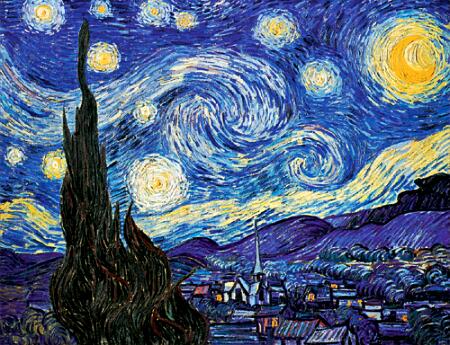
Reflecting on a Starry Night (Psalm 8)

>Complete: “When I look at the heavens, the work of thy fingers, the moon and the stars which thou hast ordained, _________________________________________” What is man that thou art mindful of him? (Psalm 8:3, 4a)

Psalm 8 is a psalm of David which glorifies God the Creator. It is the first hymn of praise in the psalter. It is also the only psalm that is constructed entirely as a direct address to God.’

In Psalm 8, the writer engages in star gazing. Like most humans have been at one time or another, the psalmist is overwhelmed by the grandeur of creation.

When I consider Your heavens, the work of Your fingers,
The moon and the stars, which You have ordained;
What is man that You take thought of him,
And the son of man that You care for him? (Psalm 8:3-4 NASB)
Viewing the magnificence of the creation led the psalmist to consider its Creator. Artur Weiser (1893-1978) comments, “Behind the glorious splendour of the brilliant sky his mind’s eye envisages him who has created that splendour. It is for him, for the Divine Creator, that his song is intended; his first and last thought is directed to the glory of God and to the praise of God (Weiser, The Psalms: A Commentary (The Old Testament Library), 140).”

Next to a seemingly endless creation, any single human, even a king, feels insignificant. The psalmist asks how a God so big can care about something so small. The assumption underlying the psalmist’s question is that God, the creator of the universe, does indeed care for him. Nancy L. deClaissé–Walford (b. 1954) comments, “Psalm 8 certainly contrasts the sovereignty of God with the earthiness of humanity, but the two are inextricably connected (deClaissé–Walford, Introduction to the Psalms: A Song from Ancient Israel, 69).”

When has admiring God’s creation led your thoughts to the Creator? Why does the God of the universe care for you? Do you think the celestial beings serve only as a backdrop to life on earth to remind us of our finitude or are there other reasons for it?

The Psalmist did not have all of the scientific data we do today to realize the scope of what he saw. He did not realize the sun was merely the closest of over one billion stars and 109 times bigger than Earth. He did not realize that the moon was a satellite of the earth, ¼ of its size. He did not realize that earth was merely the third of nine planets in our solar system. Yet, even without these facts, he realized he was small. Very small. And that God was very big, at the very least bigger than creation.

Though modern humans know more about outer space than the Psalmist, he knew enough to realize that the God of the universe cared for him. Do you?

When have you felt insignificant? Do you remember that the creator of the universe cares for you (Psalm 8:4, I Peter 5:7)?

“Saint Augustine [354-430] said that Jesus loved each person he ever met as if there were no else in all the world to love, and he loved all as he loved each. I have never known which aspect of Jesus is more incredible, his capacity for individual affection or the amazing inclusiveness of his love.” - John R. Claypool (1930-2005), The First to Follow: The Apostles of Jesus, 1

Thursday, September 22, 2011

Quality if not Quantity (Psalm 117)

How long is the shortest Psalm? Two verses (Psalm 117)

Psalm 117 is a psalm of praise. It is the 595th of the Bible’s 1089 chapters, making it the center chapter in all of Scripture. At just two verses in length, it is both the shortest Psalm and shortest chapter in the Bible. The Hebrew text contains only fifteen words.

Praise the LORD, all nations;
Laud Him, all peoples!
For His lovingkindness is great toward us,
And the truth of the LORD is everlasting.
Praise the LORD! (Psalm 117 NASB)
Some have posed that it is a fragment of what was once a longer song. Artur Weiser (1893-1978) concludes, “It is hardly possible that this shortest of all the psalms was originally an independent composition (Weiser, The Psalms: A Commentary (The Old Testament Library), 721).”

Psalm 117 is the fifth of six psalms categorized as an Egyptian Hallel (113-118). These six consecutive Psalms are said as a unit on joyous occasions. It has been assumed that these were the songs Jesus sung on the Mount of Olives before he was crucified (Matthew 26:30; Mark 14:26).

Despite its brevity, the song fulfills all of the requirements of a classic hymn. James D.G. Dunn (b. 1939) and John W. Rogerson (b. 1935) praise:

Although Psalm 117 is the shortest psalm in the psalter, it is nevertheless a classic example of a hymn in that it contains the basic elements, namely, invocations to praise and reasons why the LORD should be praised. (Dunn and Rogerson, Eerdmans Commentary on the Bible, 421)
Why do you think such a short hymn was canonized? What is the simplest song that holds meaning to you? Has anyone ever made a brief comment to you that was very meaningful?

Psalm 117 contains the unusual aspect of charging all nations to praise the Jewish God. Given the fact that its themes correspond to “Deutero-Isaiah” (Isaiah 40-55), it has been suggested that the Psalm was penned while in exile, as its singers were in the midst of a catastrophic defeat. This is significant as Patrick D. Miller (b. 1935) explains, “The psalm testifies that what prevails over ‘us’ is not the enemy but the steadfast love of God (Miller, Interpreting the Psalms, 72).”

Do you feel God’s love even in the midst of your trials?

Thursday, June 30, 2011

Lamenting the Crucifixion

In which book is it prophesied “My God, my God, why hast thou forsaken me”? Psalm (22:1)

At the ninth hour (3 PM) on the day he was crucified, Jesus cries out from the cross, “My God, my God, why have you forsaken me?” (Matthew 27:46; Mark 15:34, NASB). To accent this exclamation, Matthew and Mark leave his words in the original Aramaic. Jesus was not merely groaning but also quoting the opening lines of the 22nd Psalm.
My God, my God, why have You forsaken me?
Far from my deliverance are the words of my groaning. (Psalm 22:1, NASB)
Psalm 22 has numerous striking parallels to the crucifixion of Jesus. In his “Images of Jesus” class at the University of Tennessee, David Dungan (1936-2008) assigned students the task of drawing as many parallels as possible between the Psalm and the crucifixion.

How many parallels do you see? What do you make of the connection between the psalm and the crucifixion?

Some have speculated that in citing the Psalm’s initial verse, Jesus intended to relay the entire Psalm’s content. Psalm 22 is classified as a psalm of lament and like almost all psalms of that genre, the psalmist begins in gloom and ends in hope.

Do you think Jesus intended to reference the entire Psalm or just its initial verse? Why?